Martyn’s Law

Martyn's Law

Meet Martyn's Law requirements using your existing fire system
Overview

From Spring 2027, publicly accessible premises across the UK will need to comply with the Terrorism (Protection of Premises) Act 2025, better known as Martyn’s Law. The new legislation aims to improve preparedness for terrorist incidents and strengthen the protection of people in public spaces.

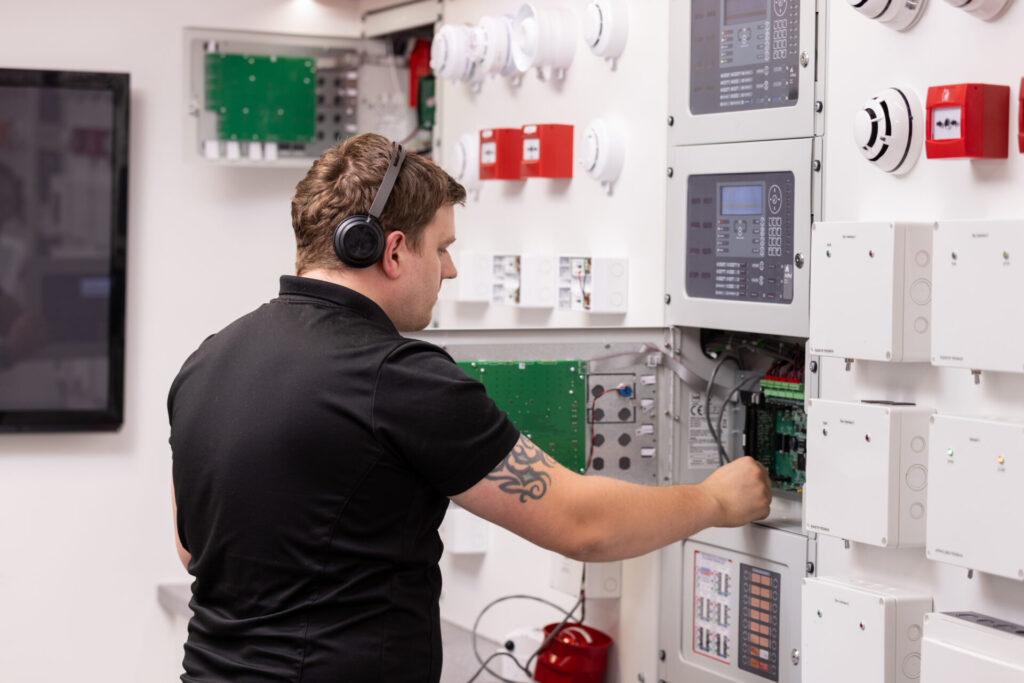
For sites with Advanced MxPro 5 panels installed, compliance may be closer than you think. Using ConfigTool’s flexible programming options, the system can be configured to support lockdown and invacuation signalling strategies, helping you make the most of your existing infrastructure.

Rather than introducing additional standalone panels or separate systems where they may not be necessary, we believe in making better use of your installed system first. This can help reduce cost, minimise disruption and simplify implementation while maintaining a coordinated approach to life safety.

How Advanced can help

The versatile nature of MxPro 5 and ConfigTool allow for easy lockdown programming. One example involves using a manual call point (MCP) on the loop to initiate a lockdown. In this case the manual call point is adapted so that it is recognised as an alternate signal (as opposed to the regular fire signal).

The following guidance covers the application of using a manual call point to activate a lockdown.

What is Martyn's Law?

Martyn’s Law, officially the Terrorism (Protection of Premises) Act 2025, is designed to help public venues and events better prepare for and respond to terrorist incidents, improving safety and reducing the risk of harm.

The legislation will require certain publicly accessible premises to have appropriate plans, procedures and staff training in place. The focus is on preparedness and effective emergency response, helping organisations protect people should an incident occur.
 

Martyn's Law FAQs

Martyn’s Law received Royal Assent on 3 April 2025 and is expected to come into force no earlier than April 2027 following a minimum 24-month implementation period.

This phased approach gives organisations time to understand the legislation, review their responsibilities and put appropriate procedures, training and preparedness measures in place before compliance becomes mandatory.

Martyn’s Law (the Terrorism (Protection of Premises) Act 2025) uses a tiered approach to ensure that security requirements are proportionate to the size and nature of a premises.

Standard Tier

Standard Tier refers to premises where between 200 and 799 people are expected to be present at the same time, for example leisure centres, small music venues and small to medium-sized theatres.

Standard Tier requirements focus on preparedness, procedures and staff awareness. Responsible persons must have plans in place for key responses such as evacuation, invacuation, lockdown and communication, and ensure staff understand what to do in the event of a terrorist incident. Most requirements are procedural rather than physical security measures.

Enhanced Tier

Premises and qualifying events where it is reasonable to expect 800+ people fall into the Enhanced Tier, for example stadiums and arenas, large concert venues and major transport hubs.

Enhanced Tier premises must meet all Standard Tier requirements and take reasonably practicable measures to reduce vulnerability to terrorism and the potential for harm. This includes documenting procedures and security measures, assessing vulnerabilities, maintaining appropriate public protection measures, and ensuring ongoing compliance through designated responsible personnel.


Martyn’s Law was introduced to improve how publicly accessible premises and events across the UK prepare for and respond to the threat of terrorism. It was developed following the 2017 Manchester Arena attack and is named in honour of Martyn Hett, one of the 22 people who lost their lives. The legislation aims to ensure organisations have proportionate measures in place to help protect people and reduce the impact of an attack. 

The focus of Martyn’s Law is on preparedness, awareness and effective response rather than extensive security upgrades. By requiring those responsible for certain premises and events to have clear procedures, trained staff and effective communication plans, the legislation seeks to improve public safety and help save lives during a terrorist incident.

Schools and other education settings can fall within the scope of Martyn’s Law where it is reasonable to expect 200 or more people to be present at the same time, including staff. However, schools are treated differently from many other premises under the legislation.

Early years, primary, secondary and further education settings remain within the Standard Tier, even where more than 800 people may be present. This means schools are expected to focus on practical preparedness measures, such as having procedures for lockdown, invacuation, evacuation and communication, while ensuring staff understand how to respond in the event of a terrorist incident

Need support preparing for Martyn's Law?

Our team can help you use your existing Advanced equipment to meet the requirements of Martyn’s Law.
Call us on: 0345 894 7000, email: enquiries@advancedco.com or complete the form below:

Whatever your query, we'd love to hear from you...
required
required
required
required
required
required
required
required